
#1 Shopify White Label Ecommerce Agency
White Label Shopify Service Agency
Scale your agency with expert white label Shopify services designed to help you take on more clients, increase revenue, and deliver high-quality ecommerce solutions without the overhead of hiring an internal team.
- Conversion First
- Profitable Ads
- Clear Reporting
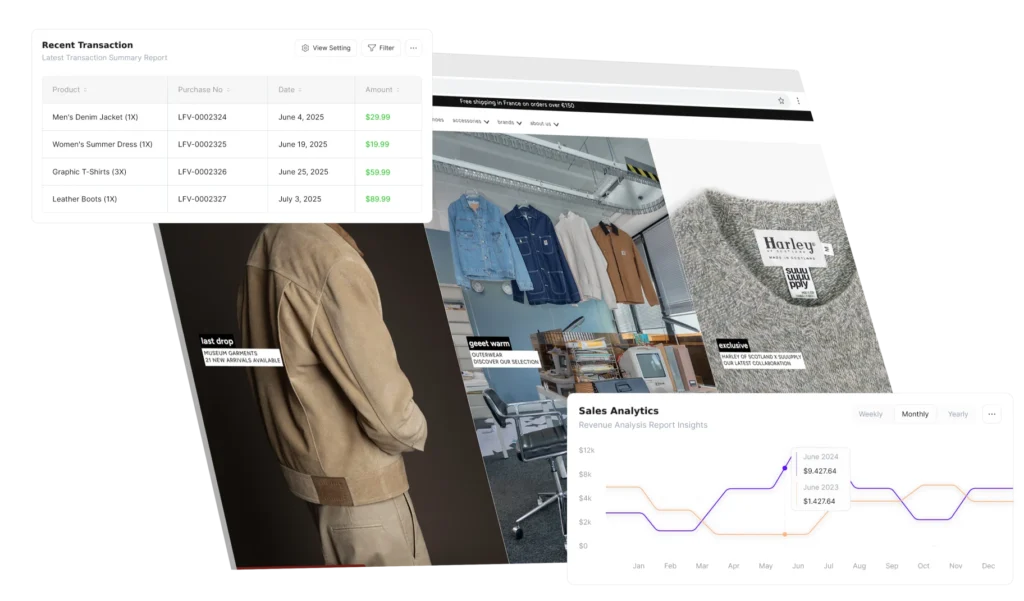
White Label Shopify Solutions for Agencies That Want to Scale
A white label Shopify service agency gives digital agencies, marketing firms, and ecommerce consultants the ability to expand their service offering without adding in-house overhead. Instead of hiring developers, designers, and Shopify experts for every new client project, you can partner with a reliable team that works behind the scenes under your brand. This creates a smoother workflow, stronger client retention, and more room to grow your revenue.
Whether you need help with Shopify store setup, custom theme development, app integration, or ecommerce strategy, white label support makes it easier to deliver complete solutions at scale. By outsourcing fulfillment to an experienced Shopify partner, agencies can focus on sales, account management, and client relationships while still providing high-quality ecommerce development services.
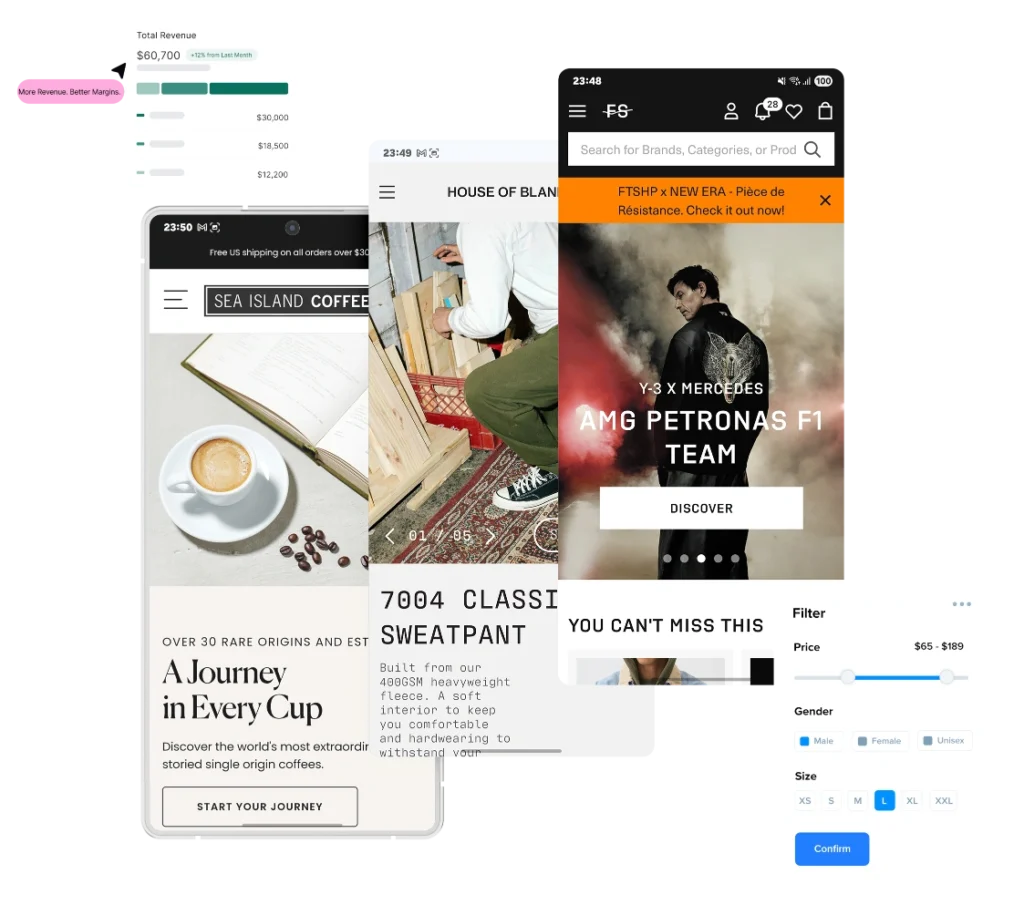

Custom Shopify Development and Design Under Your Brand
Our white label Shopify services are built to support agencies that need dependable custom development and high-converting storefront design. From Shopify theme customization and landing page design to full store builds and Shopify Plus projects, we help agencies deliver polished ecommerce experiences without sacrificing quality. Every project is completed with your client goals, branding, and performance expectations in mind.
We also support Shopify migration services, product page optimization, navigation improvements, and mobile-first design to help online stores perform better across every device. With a strong focus on user experience, conversion rate optimization, and clean front-end development, our team helps agencies provide results-driven Shopify solutions that look professional and support long-term growth.
Ongoing Shopify Support, Maintenance, and Ecommerce Growth
A strong white label Shopify service agency should offer more than one-time development. Ongoing Shopify support is essential for ecommerce brands that need technical updates, bug fixes, speed optimization, and regular store improvements. By offering maintenance and retainers under your own agency brand, you can create recurring revenue while giving clients the expert support they need to keep their store running smoothly.
Our white label team can assist with Shopify maintenance, app troubleshooting, checkout improvements, UX updates, and performance monitoring so your clients stay competitive in a fast-moving ecommerce space. This kind of long-term Shopify partnership helps agencies become more valuable to their clients while improving store functionality, customer experience, and online sales over time.

Testimonials
What our customers say
See what our clients have to say about working with Anzilo and the growth we’ve helped them achieve through performance-driven ecommerce marketing.
Anzilo helped us grow traffic, conversions, and revenue faster than expected.

Daniel Carter
Founder, DTC Skincare Brand
A game-changing team that improved our campaigns and delivered real growth.

Priya Mehta
Head of Ecommerce, Fashion Brand
Anzilo transformed our ecommerce strategy and helped us scale with confidence.

Olivia Bennett
Marketing Director, Lifestyle Brand
Frequently Asked Questions
Got a question? Get your answers
Quick answers to common questions about our services, pricing, and process. If you have a specific goal, contact us and we will recommend the best next step.
Will Our Clients Know We Use a White Label Shopify Partner?
In a true white label setup, your agency remains the visible brand and the delivery partner stays behind the scenes. Competitor pages in this category repeatedly position “no direct client contact,” branded delivery, and confidentiality as core selling points because agencies want to protect trust, continuity, and account ownership.
The stronger way to frame this on your page is to show that invisibility is built into the workflow, not treated like a vague promise. Your agency should own client communication, approvals, and presentation, while the white label team works through your preferred PM structure, internal updates, and delivery process so the experience feels seamless from the client side.
How Is Store Access Handled on a White Label Shopify Project?
Shopify supports collaborator accounts for Partners, which are specifically designed for work on client stores. Collaborators can be given only the permissions they need, they do not count toward the store’s staff limit, and Shopify requires two-step authentication for collaborator logins, which adds an important layer of security.
That makes white label work easier to control because access can be limited by role and revoked when the job is complete. Shopify also uses collaborator request codes, and store owners can regenerate those codes if needed, so the merchant or lead agency keeps control over who can request entry in the first place.
Who Owns the Shopify Store, Theme Work, and Deliverables After Launch?
From Shopify’s side, store ownership cannot be transferred to a collaborator account. That means the owner seat stays with the merchant or lead agency while the white label partner works through granted access rather than taking control of the store itself.
For your page, the real trust signal is handoff clarity. A good white label arrangement should make it obvious that the live store, theme configuration, documentation, and any custom deliverables are delivered under your brand and remain in the client’s ecosystem, rather than being trapped behind a third-party relationship. That is the practical concern behind all the competitor language around NDA protection, branded delivery, and agency-first execution.
Can a White Label Shopify Agency Handle Shopify Plus, B2b, or Wholesale Requirements?
Yes, but that capability matters only when the partner understands how Shopify B2B is actually structured. Shopify states that B2B can run in the same store as D2C or in a separate B2B-only store, and merchants can tailor the buying experience by company for things like pricing, currency, products, payment methods, shipping methods, and store content.
That is useful for agencies pitching wholesale or trade ecommerce because those projects usually need more than standard storefront setup. The better message for your page is that your team can help scope whether a blended or dedicated B2B setup makes sense, then build around the commercial model the client actually needs instead of forcing every wholesale brief into the same structure.
Can You Support International Shopify Stores and Multi-market Rollouts Under Our Brand?
Shopify Markets lets merchants define markets and submarkets for different customer groups, and Shopify’s documentation says those markets can include custom currency, product availability, domains, languages, and in some cases theme or checkout customizations depending on plan level. Shopify also lets merchants preview market-specific experiences before launch.
For your page, the stronger angle is strategic rollout rather than generic “international support.” You want to show that your agency can structure country groups logically, separate high-priority regions when they need different pricing or targeting, and help clients expand market by market with a clearer operational plan instead of a messy one-store-for-everything approach.
Can a White Label Shopify Partner Fit into Our Agency’s Workflow?
Competitor pages keep highlighting dedicated project managers, structured updates, and agency-side control because this is one of the real buying criteria in the category. Agencies do not want a second brand showing up inside the project; they want a delivery team that can adapt to their own process and operate like an internal extension.
That is why this FAQ matters on your page. The best white label model is one that plugs into your tools, approval stages, naming conventions, QA standards, and communication rhythm, so your internal team does not have to rebuild its operations every time a Shopify brief lands. That operational fit is often more persuasive than broad claims about being “full service.”
What If the Client Already Uses Apps, Custom Workflows, or External Systems?
This is where many competitors try to separate themselves from generalist providers. Comparison and service pages in the space repeatedly call out app integrations, API work, ERP and CRM connections, 3PL integrations, and checkout extensibility because serious Shopify projects often depend on existing systems and business rules.
A better FAQ answer is not simply “yes, we install apps.” It is that your team can review the current stack, work around what already exists, and choose the right level of customization for the brief. Shopify supports checkout and customer account app extensions, and Shopify Functions allow developers to customize backend logic for areas such as discounts, validation, and fulfillment when default settings are not enough.
Can You Support Headless Shopify or More Advanced Technical Builds?
Yes, when the project actually justifies it. Shopify’s headless stack includes Hydrogen for storefront development and Oxygen for deployment, while Shopify Functions extend backend commerce logic. That gives agencies a route for more advanced storefront architecture without leaving the Shopify ecosystem entirely.
The stronger positioning for your page is that you do not force every client into headless. Instead, you can help agencies decide whether a standard Shopify build, checkout customization, account extension, or a full headless implementation is the right answer for the brief, which signals technical maturity instead of selling complexity for its own sake.
Need a Clearer Growth Plan For Your Store?
We’ll identify what’s slowing growth, where the biggest opportunities are, and how to improve performance across your funnel.