
#1 SEO Ecommerce Agency
Ecommerce SEO Agency for Scalable Organic Growth
We help ecommerce brands increase organic visibility, attract higher intent traffic, and turn more searchers into customers through technical SEO, category and product page optimization, content strategy, and scalable search growth.
- Conversion First
- Profitable Ads
- Clear Reporting
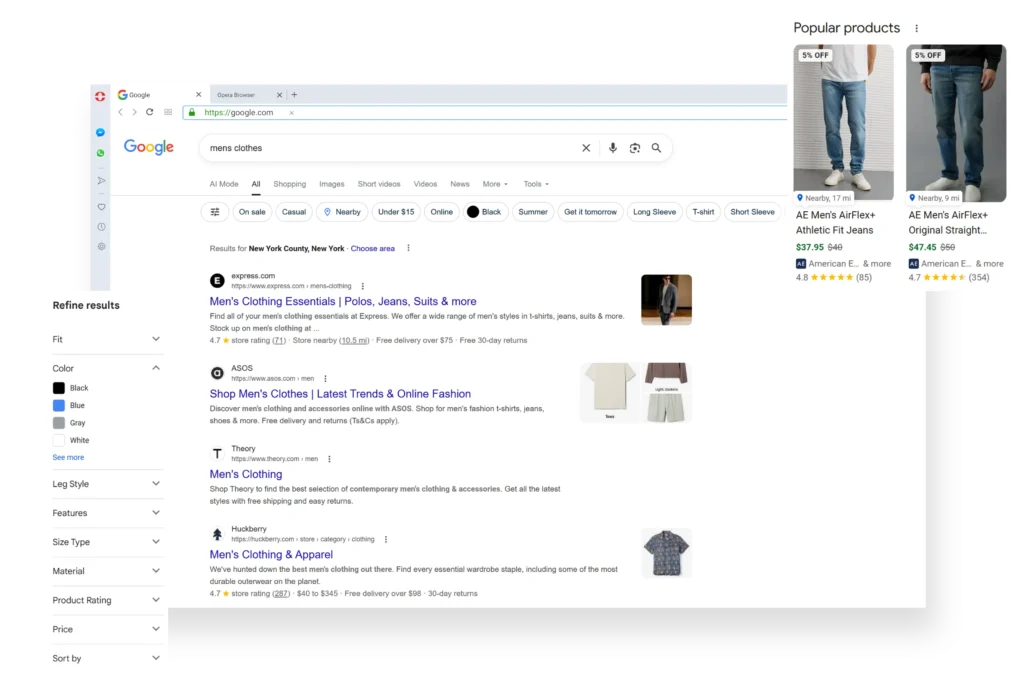
Why Ecommerce Brands Need More Than Basic SEO
Ecommerce SEO is different from traditional SEO. Ranking a content page is one thing. Growing thousands of SKUs, seasonal pages, faceted navigation, internal links, category hubs, and revenue-driving landing pages is another.
A strong ecommerce SEO agency should help you:
- Increase non-brand organic traffic
- Improve rankings for high-intent category and product terms
- Fix technical issues that suppress crawlability and indexation
- Build scalable content systems for collections, guides, and buying journeys
- Strengthen internal linking across categories and product families
- Improve organic conversion paths, not just sessions
- Support long-term growth across Shopify, Magento, WooCommerce, BigCommerce, and custom stacks
We focus on SEO that aligns with revenue, merchandising, and customer acquisition goals.
By improving how customers move from first visit to purchase, brands can increase conversions, grow average order value, and get more profit from the traffic they already paid for.


Who We Work With
We work with ecommerce teams that need SEO to scale with the business, not break as the site gets larger.
DTC Brands
Fast-growing brands that want to increase non-brand traffic, strengthen category visibility, and reduce reliance on paid media.
Multi-Category Retailers
Stores with large catalogs, complex navigation, and multiple product lines that need stronger structure, targeting, and internal linking.
Subscription Ecommerce Businesses
Brands that need SEO to support recurring revenue through product education, comparison pages, and high-intent landing pages.
Enterprise Ecommerce Teams
Larger teams that need strategic SEO support across multiple stakeholders, templates, and revenue-driving page types.
Replatforming or Expanding Brands
Businesses moving platforms, launching new collections, or scaling inventory without losing existing search visibility.
In-House Marketing Teams
Teams that need an ecommerce SEO partner to bring strategy, prioritization, and execution support.
Results You Can Expect From Ecommerce SEO
Our ecommerce SEO strategies are designed to grow the metrics that actually matter to your business. That means increasing non-brand visibility, improving rankings for high-intent category and product searches, and bringing in more qualified traffic from users who are actively looking for what you sell. Instead of chasing vanity traffic, we focus on search opportunities that support product discovery, conversion, and long-term revenue growth.
Over time, strong ecommerce SEO helps reduce your reliance on paid acquisition by building a more durable organic channel. With the right technical foundation, site structure, and content strategy in place, your store can capture demand across the full buying journey while creating an organic presence that compounds. The result is a stronger search footprint, better traffic quality, and a more defensible growth engine for the brand.

Testimonials
What our customers say
See what our clients have to say about working with Anzilo and the growth we’ve helped them achieve through performance-driven ecommerce marketing.
Anzilo helped us grow traffic, conversions, and revenue faster than expected.

Daniel Carter
Founder, DTC Skincare Brand
A game-changing team that improved our campaigns and delivered real growth.

Priya Mehta
Head of Ecommerce, Fashion Brand
Anzilo transformed our ecommerce strategy and helped us scale with confidence.

Olivia Bennett
Marketing Director, Lifestyle Brand
Frequently Asked Questions
Got a question? Get your answers
Quick answers to common questions about our services, pricing, and process. If you have a specific goal, contact us and we will recommend the best next step.
How Long Does Ecommerce SEO Usually Take to Show Meaningful Results?
Most ecommerce SEO campaigns start showing early movement within 3 to 6 months, but meaningful revenue impact usually takes longer. The timeline depends on your site’s current authority, technical health, competition, catalog size, internal resources, and how quickly recommendations are implemented. Brands with strong foundations can see faster gains, while larger or more complex stores often need more time to unlock compounding results.
SEO is not a one-time fix for ecommerce websites. It works best when technical improvements, category optimization, internal linking, and content development are executed consistently over time. The strongest results usually come from sustained work that improves how search engines crawl, index, and rank the pages that matter most to revenue.
What Should an Ecommerce SEO Agency Measure Beyond Rankings and Traffic?
A strong ecommerce SEO agency should measure business outcomes, not just keyword positions and session growth. That includes non-brand organic traffic, revenue from organic landing pages, assisted conversions, conversion rate by page type, category-level visibility, and the quality of traffic reaching commercial pages. These metrics give a clearer picture of whether SEO is helping the business grow.
Rankings and traffic still matter, but they are not enough on their own. An ecommerce SEO strategy can drive more visits without improving sales if the wrong keywords, page types, or user journeys are being prioritized. The best reporting connects organic growth to revenue, customer acquisition efficiency, and the commercial value of the pages being optimized.
Do You Need New Content to Grow Ecommerce SEO, or Can Existing Pages Be Improved?
Most ecommerce brands do not need to start from scratch. In many cases, growth comes from improving existing category pages, product pages, collections, buying guides, and internal linking rather than simply publishing more new content. Updating what already exists can often unlock faster SEO gains because those pages may already have authority, relevance, and historical performance data.
New content becomes important when there are clear gaps in search coverage. That can include comparison pages, use-case pages, collection support content, or informational assets that help users move toward purchase. The right approach is usually a mix of optimization and expansion, based on where the store has the highest opportunity to gain visibility and drive revenue.
How Involved Does Your Internal Team Need to Be During an Ecommerce SEO Engagement?
The level of involvement depends on how your business is structured, but most ecommerce SEO engagements work best as a collaborative process. Your internal team typically provides access, brand context, product knowledge, and implementation support, while the agency leads strategy, prioritization, and SEO direction. This keeps the work aligned with merchandising, development, and marketing priorities.
That does not mean your team needs to be buried in day-to-day SEO tasks. A good ecommerce SEO agency should reduce internal guesswork by giving clear recommendations, practical action plans, and defined priorities. The goal is to make execution easier for your team, not create more complexity around content, development, or reporting.
Can Ecommerce SEO Work for Stores With Large Catalogs and Constant Product Changes?
Yes, ecommerce SEO can work extremely well for large catalogs, but it requires a structured approach. Stores with thousands of SKUs, frequent inventory changes, and layered navigation need scalable systems for indexing, internal linking, template optimization, and category targeting. Without that structure, large ecommerce sites often create crawl waste, duplicate pages, and missed ranking opportunities.
Large stores benefit most when SEO is applied at the page-type and site-architecture level, not just one page at a time. That means improving how categories are organized, how products are linked, how filters are handled, and how search demand is mapped across templates. When done correctly, large catalogs become an advantage because they create more opportunities to capture commercial search intent at scale.
What Happens if You Are Planning a Replatform or Site Migration?
A replatform or site migration can either protect and strengthen your organic visibility or cause major traffic loss if SEO is ignored. Ecommerce migrations often affect URLs, templates, metadata, structured data, internal linking, canonicals, redirects, and indexation rules. Because of that, SEO should be part of migration planning before launch, not something reviewed after problems appear.
The right migration process includes pre-launch audits, redirect mapping, crawl testing, template reviews, and post-launch monitoring. This helps preserve existing rankings while giving the new site a better technical foundation for future growth. For ecommerce brands moving to Shopify, Magento, WooCommerce, BigCommerce, or a headless setup, migration SEO is one of the highest-risk and highest-value phases to get right.
How Do You Know if an Ecommerce SEO Agency Is a Good Fit for Your Brand?
A good ecommerce SEO agency should understand how online stores actually grow. That means they can speak clearly about category-page strategy, product-page optimization, internal linking, crawl management, indexation, site architecture, and revenue-focused reporting. They should also be able to explain priorities in plain language and connect SEO work to business outcomes rather than hiding behind generic deliverables.
Fit also comes down to how the agency works with your team. The best partner is one that matches your growth stage, communicates clearly, understands your platform constraints, and can prioritize the work that will have the biggest commercial impact. If an agency cannot explain how its recommendations will improve visibility, traffic quality, and revenue, it is probably not the right fit.
What Makes Ecommerce SEO Different From SEO for Lead Generation or Local Businesses?
Ecommerce SEO is more complex because it has to support large numbers of pages, changing inventory, layered navigation, and direct revenue attribution. Instead of optimizing a small set of service pages, ecommerce SEO often involves category pages, product pages, filters, collections, support content, and technical systems that influence how search engines crawl and index the site. The goal is not just visibility, but product discovery and online sales.
That difference changes how strategy should be built. Ecommerce brands need SEO that accounts for commercial intent, page hierarchy, template consistency, conversion paths, and catalog scale. What works for a lead generation website or local business usually is not enough for an online store that depends on category rankings, product visibility, and long-term organic revenue growth.
Need a Clearer Growth Plan For Your Store?
We’ll identify what’s slowing growth, where the biggest opportunities are, and how to improve performance across your funnel.